An American Plant & Equipment feed
Machines that make the impossible look routine.
119 films of real industrial machinery at work, every one watched, credited and written up by people who buy and sell this equipment for a living. Tunnel borers, robot cells, quilting lines, five axis mills and the largest vehicles ever built.
- 119Verified films
- 10Categories
- 12Machine explainers
 26:04
26:04 Opening film: How Draglines Work (Inside One of the World's Largest Machines). Filmed and published by Earthmovers Media.
The feed
Page 1 of 5. Every category mixed together, on purpose.
-
 13:52 Robotics and Factory Automation
Mercedes Benz A-Class Body shop, under-body, body, seats, wheels, etc.
Fourteen minutes inside a Mercedes body shop where sheet metal is welded, glued and handed between robots without a person in frame. Cells pass car bodies to each other like a relay team. KUKA published this as a capability film and it remains one of the most complete looks at a modern automotive body shop anywhere online.
-
 45:06 Giant Machines
Dirty Great Machines - Bucket Wheel Excavator | Technology Documentary | Reel Truth. Science
A full-length documentary on the bucket wheel excavator, the largest land vehicle humanity has ever built. The Bagger 293 weighs about 14,200 tons, stands 96 metres tall and can move 240,000 cubic metres of earth in a day. Forty-five minutes of engineering that reads like science fiction but has been running in German lignite mines for decades.
-
 17:29 Precision
Touring ZEISS: Learning about CMM and Metrology!
A tour of ZEISS metrology showing how a coordinate measuring machine proves a part is what the drawing says it is. Air bearings, granite bases and temperature-controlled rooms exist because at these tolerances your body heat is a measurement error. Without machines like this, precision manufacturing has no way to know it succeeded.
-
 8:02 Textile and Bedding Automation
The Robot Revolution: Automation Comes into Fashion | Moving Upstream
The Wall Street Journal follows the attempt to automate garment sewing, including the machines that can do it and the reasons most factories still use people. It is honest about what works and what does not. The best available reporting on why cloth is so much harder than steel.
-
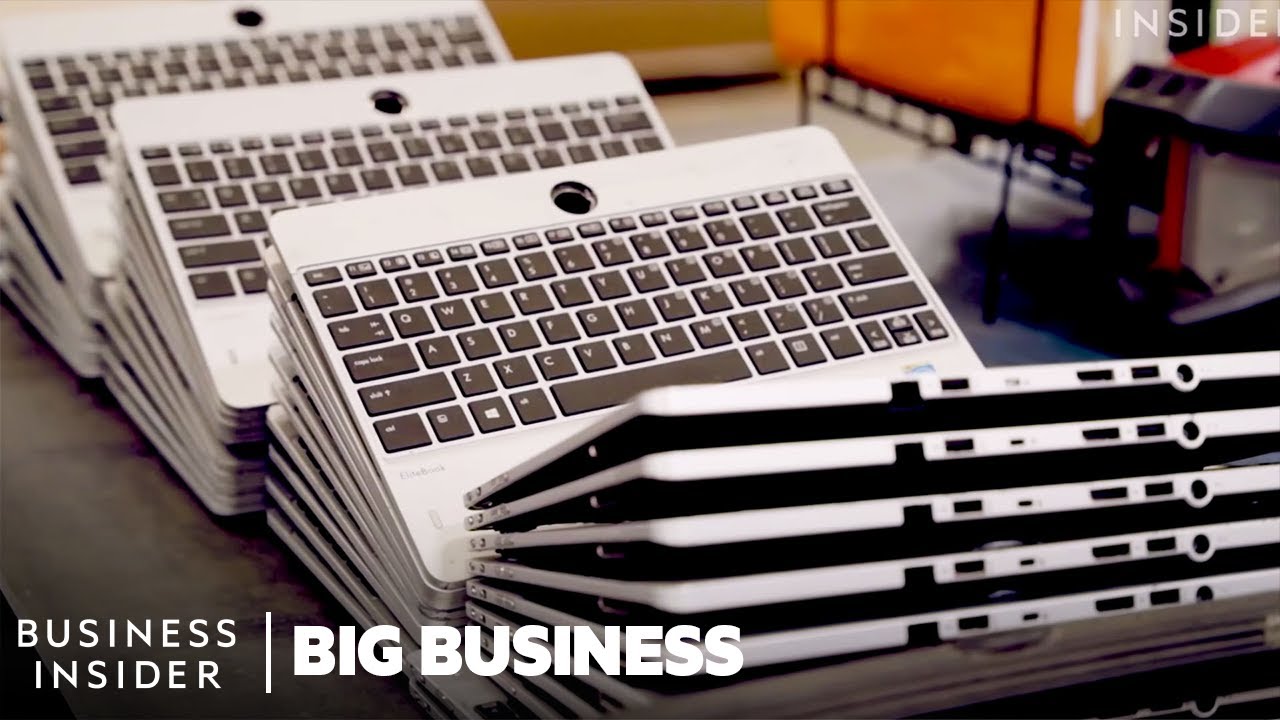 9:43 Plastics and Recycling
How 6 Million Pounds Of Electronic Waste Gets Recycled A Month | Big Business
Six million pounds of electronics a month go in as phones, servers and screens and come out as sorted streams of copper, aluminium, steel and precious metal concentrate. Shredders, magnets, eddy current separators and optical sorters do the whole job. Business Insider films the plant properly rather than in a highlight reel.
-
 4:52 Food and Packaging
Moba Omnia XF 125 and 170 Egg grading and packing machine
Eggs are handled by machine at rates that seem certain to end in disaster, weighed individually, candled for cracks and packed by grade. Nothing breaks. Egg grading is an object lesson in gentle handling at speed and it is fascinating to watch.
-
 9:44 Printing and Converting
Titan SR800 Slitter Rewinder
A slitter rewinder unwinds a giant parent reel, cuts it into narrower rolls and rewinds each one at tension, with automatic core loading and reel change. Web handling at speed is a control problem more than a mechanical one. Ten minutes of a machine doing something deceptively difficult.
-
 49:42 Energy and Heavy Industry
The Making of a Wind Turbine | Exceptional Engineering | Free Documentary
A full documentary on building a wind turbine, from blade moulds long enough to need their own building to the nacelle assembly and the offshore installation vessel. The largest blades now exceed 100 metres, with one class at 107 metres. Fifty minutes and worth every one of them.
-
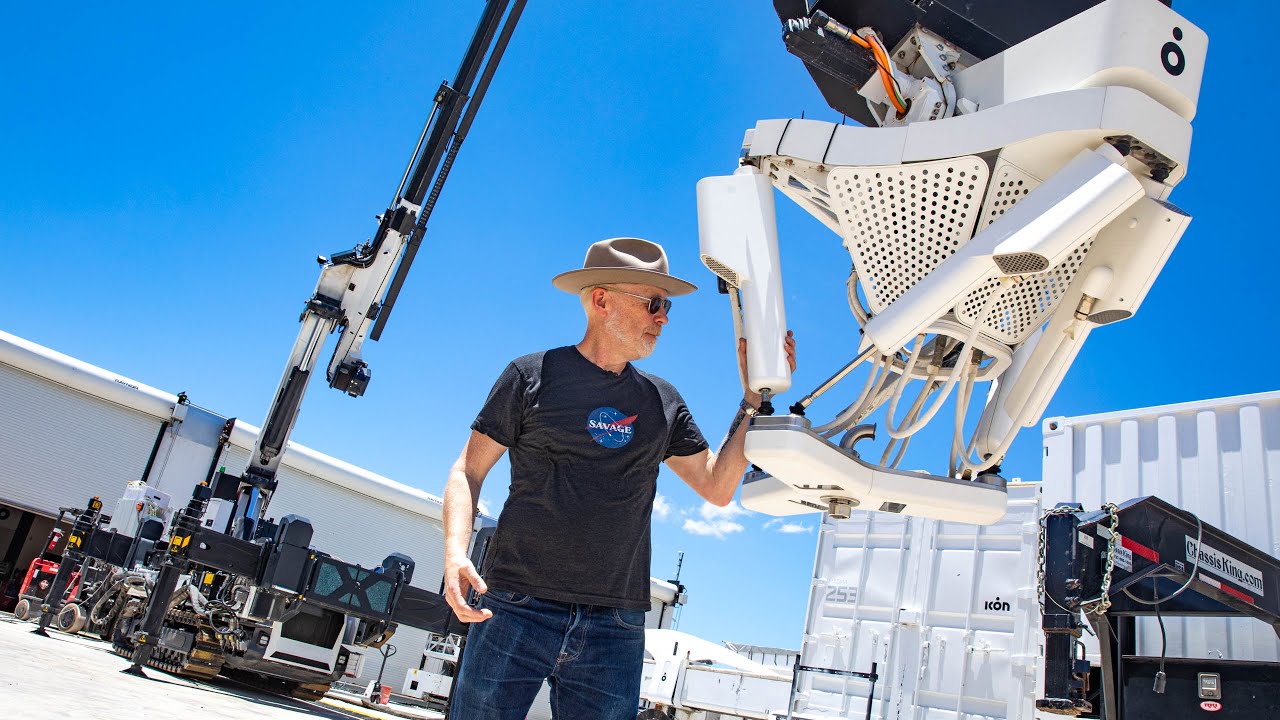 29:28 Additive Manufacturing
The Biggest 3D Printer Adam Savage Has Ever Seen!
Adam Savage stands next to a 3D printer big enough to print a boat and reacts more or less the way anyone would. The build volume changes what the technology is for entirely. Half an hour of a genuinely curious person asking good questions about a very large machine.
-
 19:56 Futuristic
Autonomous Haul Trucks in the Canadian Oil Sands
Four hundred ton haul trucks driving themselves around an oil sands mine, twenty-four hours a day, with a control room instead of a cab. BuildWitt rides along and talks to the people whose jobs changed. Twenty minutes of the most consequential automation story in heavy industry.
-
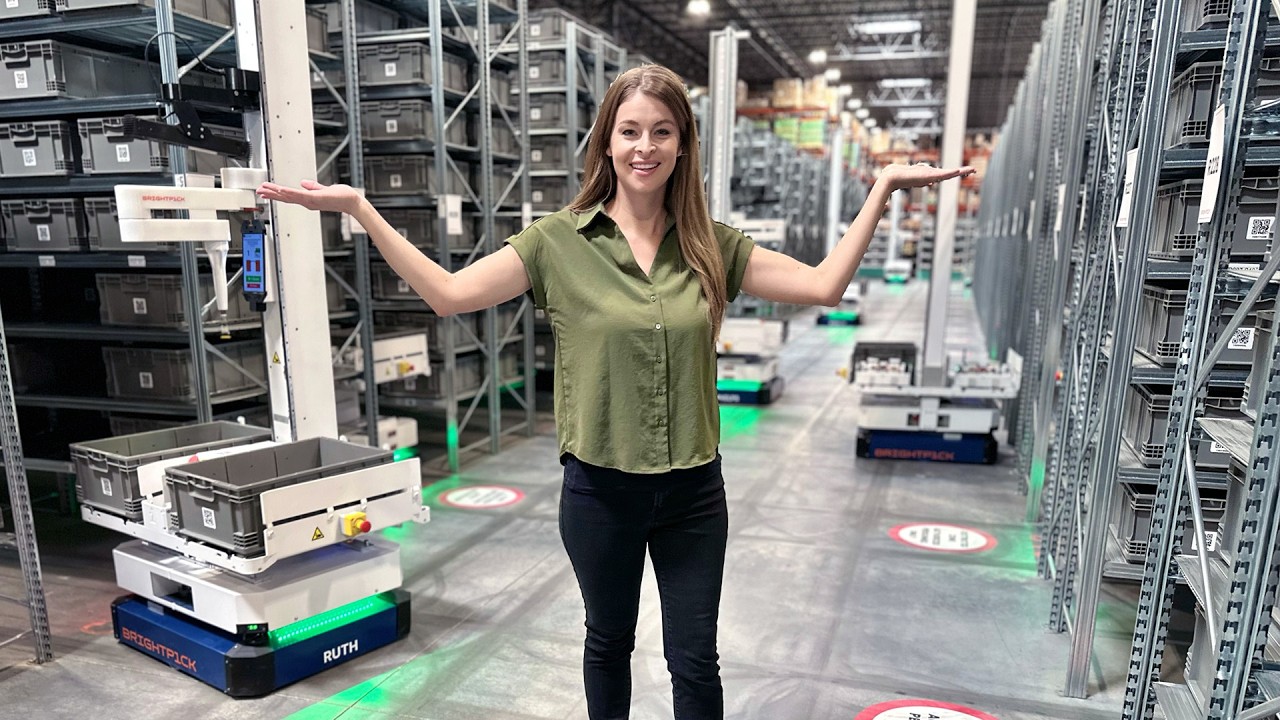 10:26 Robotics and Factory Automation
World’s most advanced robotic warehouse (AI automation)
A fleet of autonomous mobile robots carries totes to picking stations while robotic arms take the individual items out. Nothing in the building waits for a person to walk anywhere. Brightpick built this to show order fulfilment with no human in the movement loop at all, and the choreography is genuinely unsettling to watch.
- 26:04 Giant Machines
How Draglines Work (Inside One of the World's Largest Machines)
Twenty-six minutes inside one of the largest machines on earth, walking the house, the motors, the drum room and the operator's chair. Earthmovers Media explains why a dragline uses drag and hoist ropes instead of hydraulics, and what happens when a rope lets go. The best long-form dragline explainer available.
-
 15:08 Precision
Watchmaking: Machining a Watch Gear
Cutting a watch gear means getting tooth form, concentricity and finish right on a part the size of a shirt button. Fifteen minutes of setup, cutting and measuring, all of it filmed properly. It is a masterclass in how much thought sits behind a part most people never see.
-
 6:02 Textile and Bedding Automation
NOV-O-MATIC - A Automatic Sectional Warper by KARL MAYER
A sectional warper builds a beam of thousands of parallel yarns, each under identical tension, because any variation shows up as a fault in the finished fabric hundreds of metres later. Karl Mayer automated the whole sequence. It is one of the least known and most important machines in textiles.
-
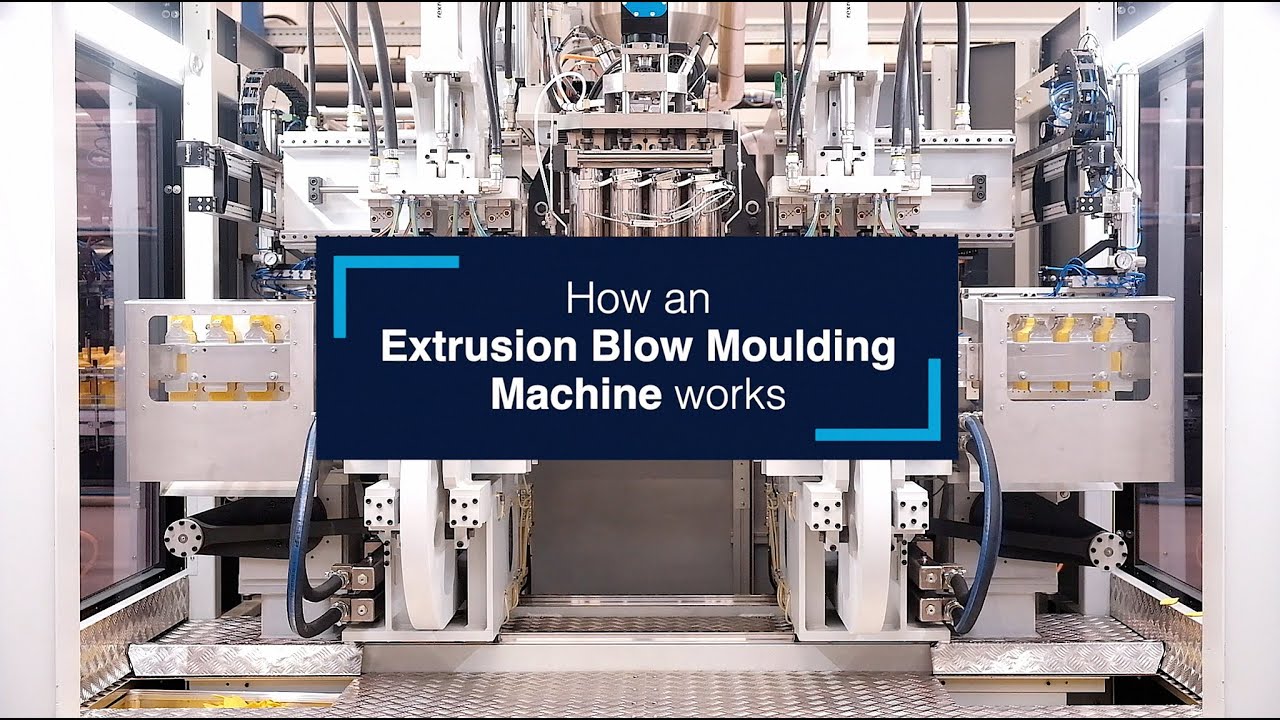 5:01 Plastics and Recycling
The Science of Plastic: Bekum's Extrusion Blow Moulding Insights
Extrusion blow moulding drops a hot tube of plastic, closes a mould around it and inflates it into a bottle, all in a few seconds. Bekum explains the parison control that decides where the wall is thick and where it is thin. Every jug of milk and every jerry can you own started this way.
-
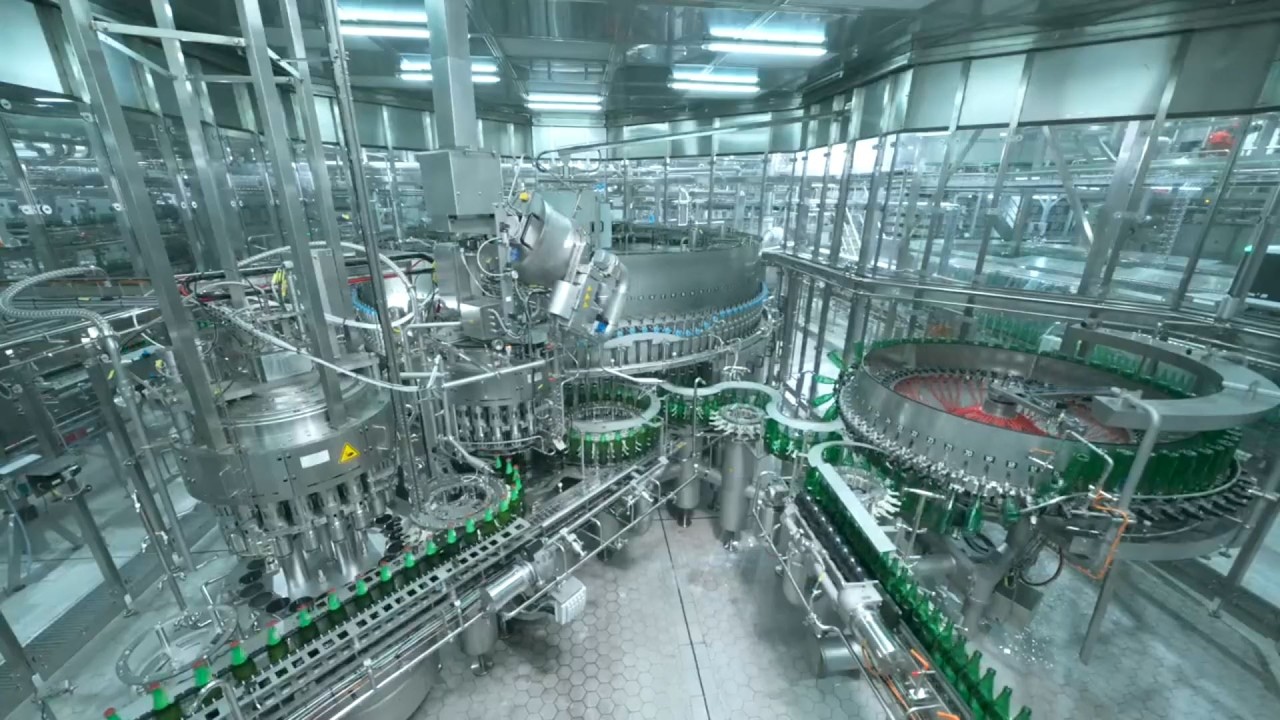 4:30 Food and Packaging
Carlsberg relies on KHS line expertise for greenfield project in China
A greenfield brewery line from empty floor to full production, filmed as a project rather than as a machine demo. You see how filler, pasteuriser, packer and palletiser have to be balanced against each other or the whole line stalls. Rare and useful insight into how a line is actually specified.
-
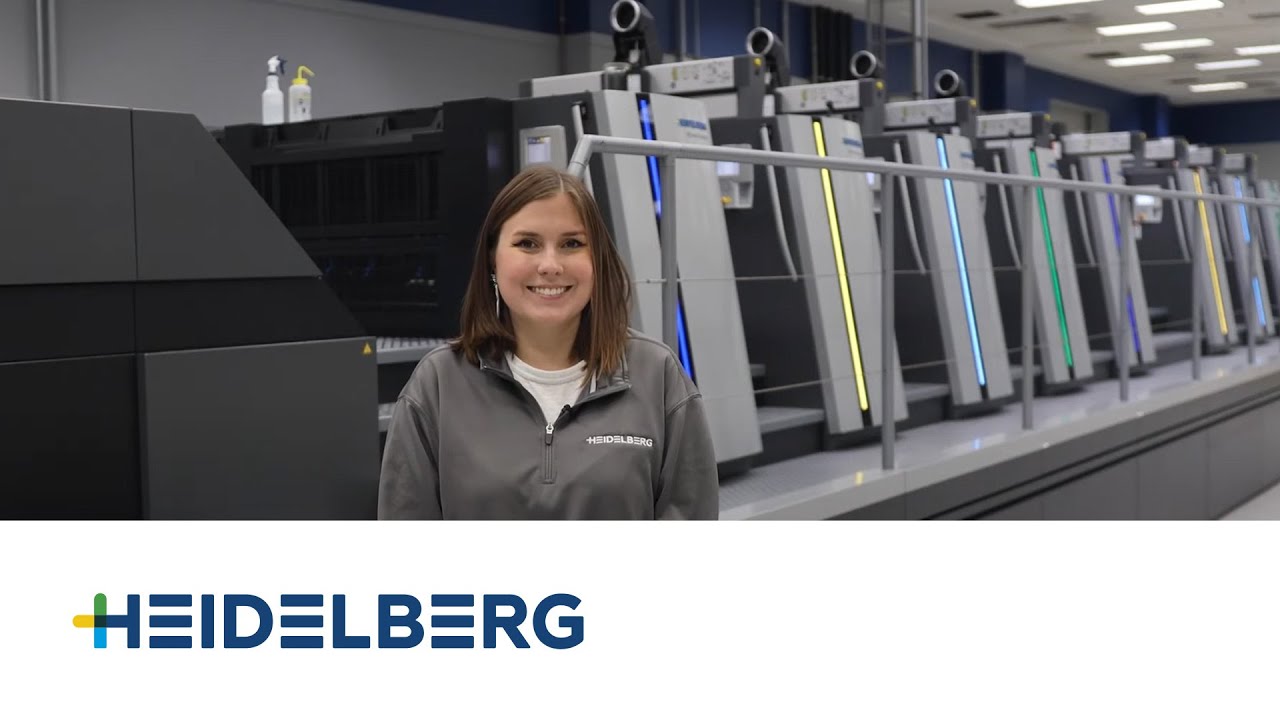 8:42 Printing and Converting
How Wrapping Paper is Printed on Speedmaster XL 106
A full production run of printed wrapping paper on a large format offset press, from plate to finished pallet. Heidelberg North America explains ink, coating and the reel-fed sheeter feeding the press. A genuinely good end-to-end look at commercial printing.
-
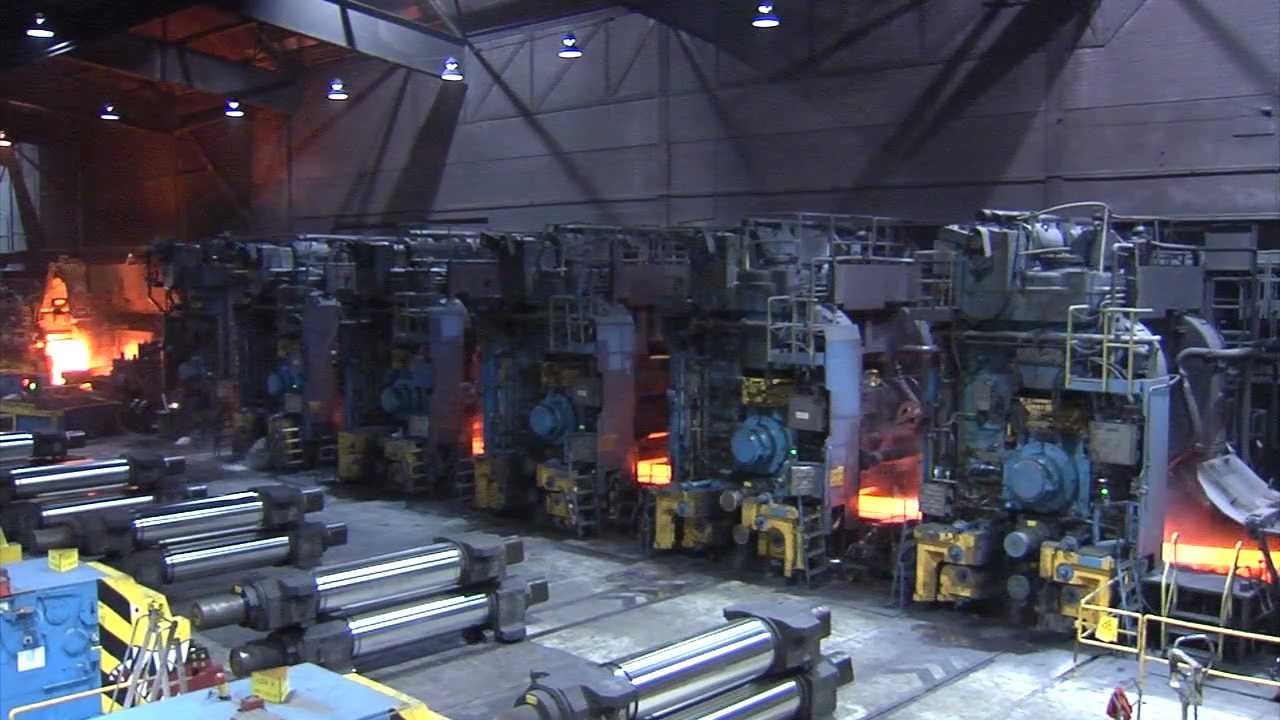 6:30 Energy and Heavy Industry
Hot Rolling Mill
A glowing slab enters the mill at one end and leaves as a coil of steel strip a few millimetres thick at the other, accelerating through each stand as it gets longer. In modern mills the strip leaves the last finishing stand at up to about 20 metres a second. It is the most violent continuous process in industry.
-
 19:57 Additive Manufacturing
The Genius of 3D Printed Rockets
Veritasium goes inside a factory printing entire rocket structures instead of welding them from thousands of parts, and asks whether it actually makes engineering sense. The printers are among the largest metal 3D printers ever built. It is as much a manufacturing strategy argument as a technology film.
-
 12:05 Futuristic
Meet The New Amazon Robot That Can Feel What It Touches
A robot with tactile sensing that can feel the item it is holding and adjust its grip, which is the missing sense in almost all industrial robotics. CNBC gets close enough to see the gripper work. Touch is the hard problem, and this is the clearest look at somebody solving it.
-
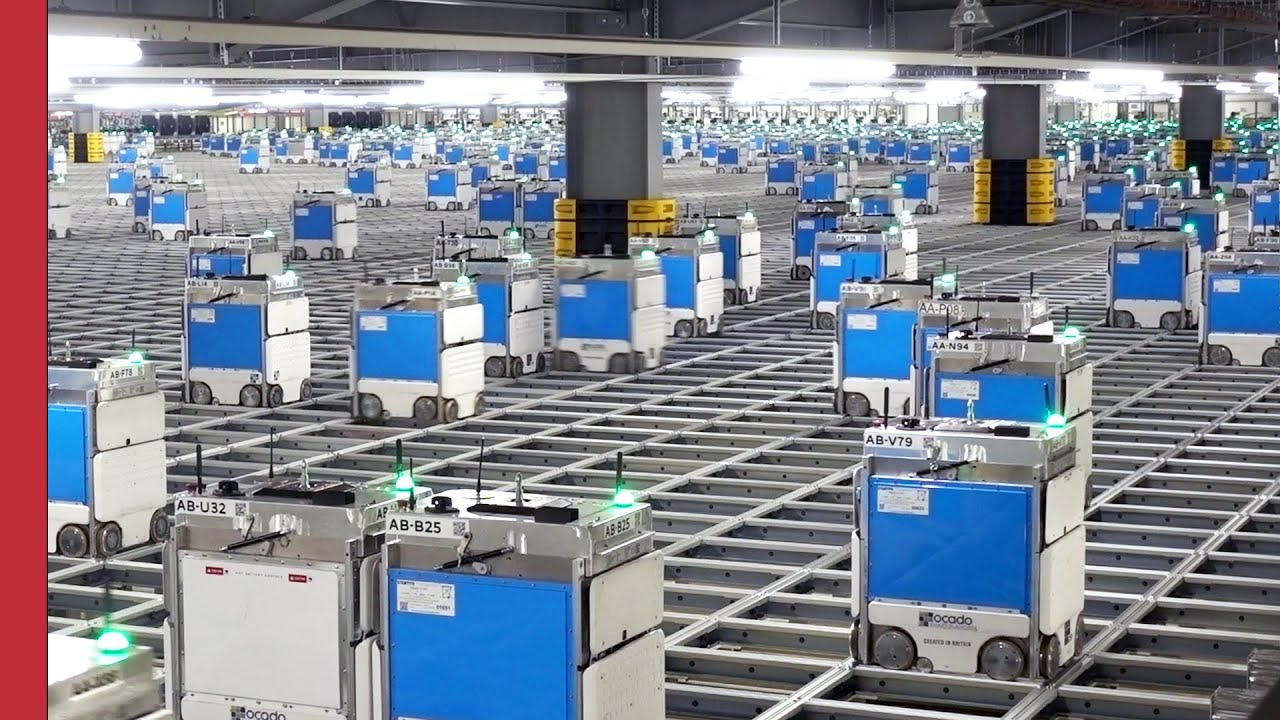 5:08 Robotics and Factory Automation
How many robots does it take to run a grocery store?
Thousands of wheeled robots swarm across a grid the size of a football field, closing on each other at speed and missing by centimetres because a central brain schedules every move in advance. A grocery order that a person would walk two miles to pick is assembled in minutes. It is the clearest explanation on the internet of what goods-to-person automation actually looks like at full scale.
-
 14:41 Giant Machines
Monster Mining Machines : How Draglines Work
A dragline is a crane the size of an office block that throws a bucket, drags it through the earth and swings a hundred tons of overburden in one pass. BuildWitt films from inside the house and up on the boom, so you finally get a sense of the physical scale. The machine walks on shoes rather than tracks because nothing else could carry it.
-
 12:21 Precision
Making Millions of TINY Precision Parts In Switzerland
Inside a Swiss shop producing millions of parts a year on rows of sliding headstock lathes, most of them running unattended. The parts are tiny, the tolerances are brutal and the volumes are enormous. It shows the economic argument for automation as clearly as the technical one.
-
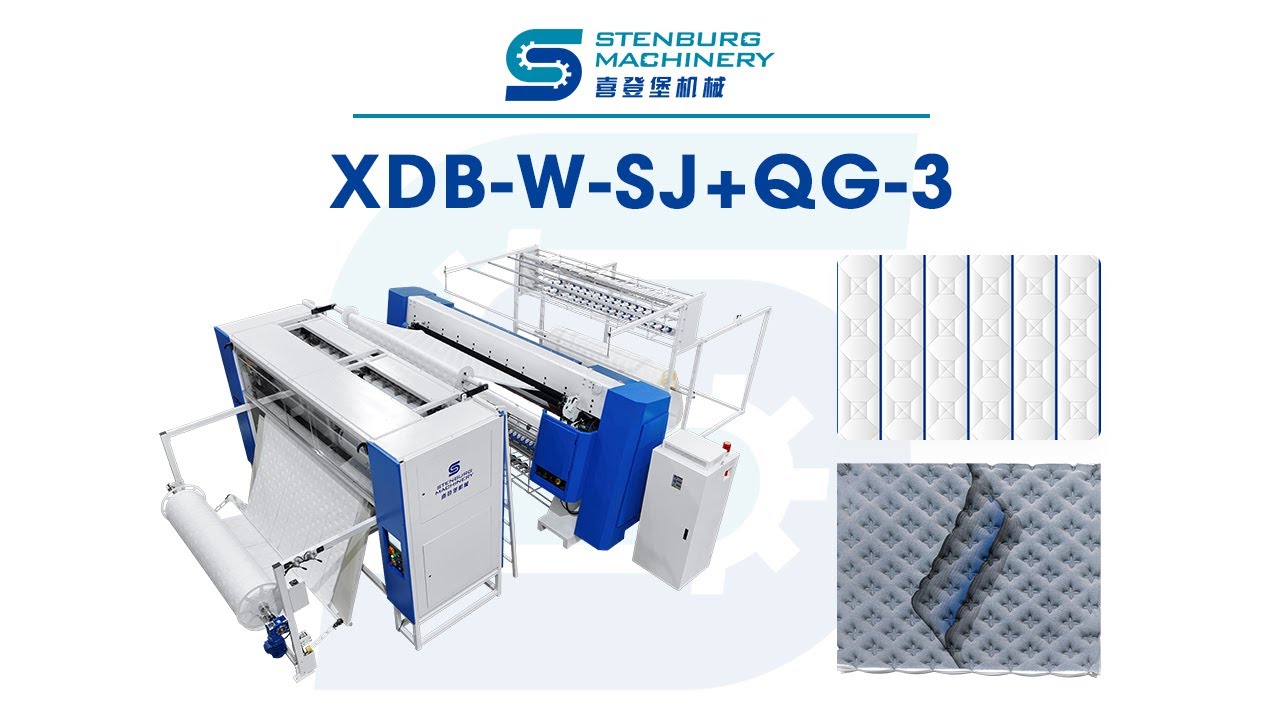 5:52 Textile and Bedding Automation
XDB-W-SJ+QG-3 Automatic Mattress Fabric Multi-needle Quilting Machine with Panel Cutter Machine
A multi-needle quilter feeding straight into a panel cutter, so quilted fabric comes off the roll and leaves as stacked, sized mattress panels. Combining the two removes the buffer between them and a whole handling step. Six minutes of the exact machine combination that most mattress plants are built around.
How these machines actually work
All 12 explainers-
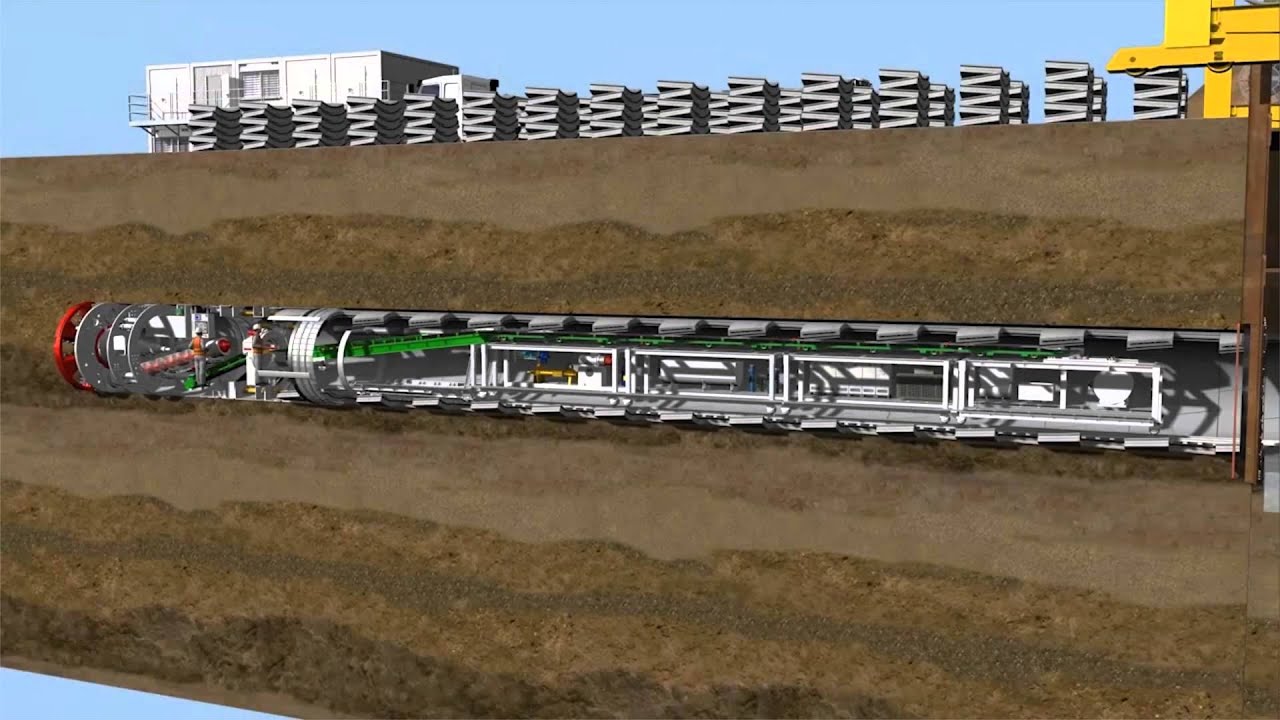 Giant Machines
Tunnel Boring Machines
A tunnel boring machine digs a tunnel and builds it at the same time. It is not a drill.
- Giant Machines
Bucket Wheel Excavators
A bucket wheel excavator digs continuously rather than in cycles. Where a shovel fills a bucket, swings, dumps and swings back, a bucket wheel keeps a wheel of buckets turning against the face and pours a permanent river of material onto a conveyor.
- Giant Machines
Walking Draglines
A dragline removes the overburden sitting on top of a coal or mineral seam. It throws a bucket out on a rope, drags it back through the ground to fill it, hoists it, swings, and dumps the spoil in a pile behind itself.