All machines Machines Hot Strip Rolling Mills
Energy and Heavy Industry
Hot Strip Rolling Mills
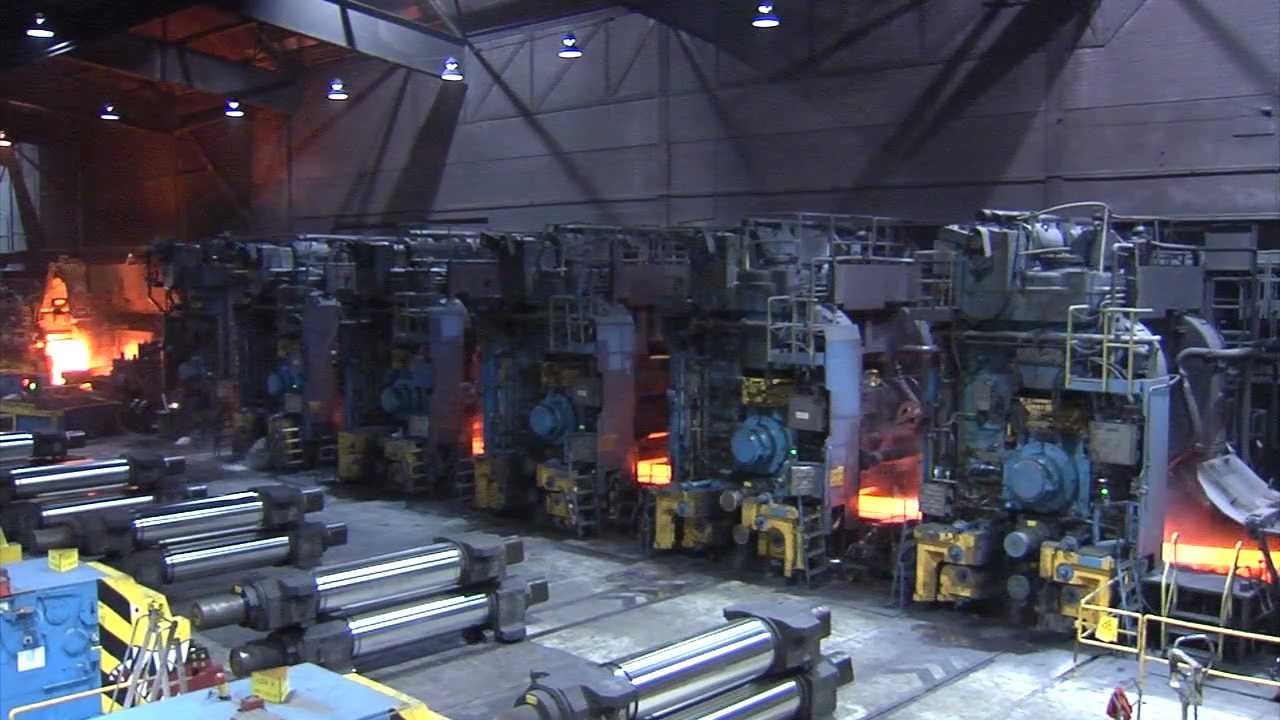 6:30
6:30 Inside a hot rolling mill. Filmed and published by Högskolan Dalarna. Plays from YouTube, nothing here is re-hosted.
What it does
A hot strip mill takes a slab of steel the size of a shipping container, heated until it glows, and squeezes it into a coil of strip a few millimetres thick and hundreds of meters long. It is the process that makes most of the flat steel in the world.
How it works
The slab is soaked in a reheat furnace until it is uniformly around 1,200 degrees Celsius. Descaling sprays blast the oxide off with high pressure water. A roughing mill reduces the slab through several passes into a long transfer bar. That bar then enters the finishing train, a line of six or seven four-high stands set only five or six meters apart and close coupled so the strip is gripped in every stand at once. Because volume is conserved and the strip gets thinner at each stand, it must move faster at each stand, so all the stands are speed-locked to each other by the control system and any error shows up instantly as a loop or a tear. Out of the last stand the strip crosses a run-out table under laminar cooling sprays that set the metallurgy, then a coiler winds it up.
The numbers
The strip leaves the last finishing stand at roughly 600 to 1,200 meters per minute, which is 10 to 20 meters a second. Coils are wound on a 750 mm inside diameter to an outside diameter of up to 2,400 mm, at up to around 220 kg per centimetre of width, with coil weights that can exceed 30 tonnes. A mis-coil, called a cobble, is one of the more dramatic industrial failures anyone can film.
Who uses one
Integrated steel mills and mini mills supplying automotive, appliance, construction, pipe and tube, and general fabrication markets.
More energy and heavy industry
See the whole category-
 49:42 Energy and Heavy Industry
How a wind turbine is made
A full documentary on building a wind turbine, from blade molds long enough to need their own building to the nacelle assembly and the offshore installation vessel. The largest blades now exceed 100 meters, with one class at 107 meters. Fifty minutes and worth every one of them.
-
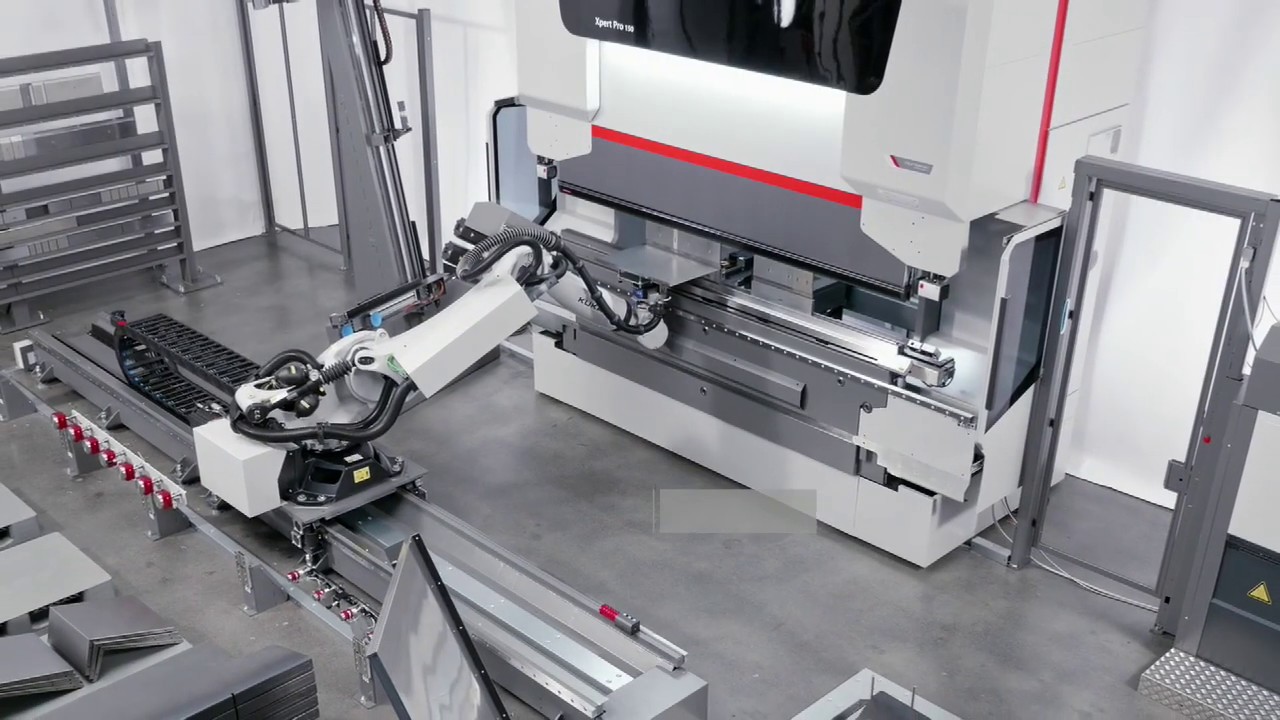 3:29 Energy and Heavy Industry
A robotic press brake bending cell
A robot feeds sheet metal into a press brake, flips it between bends and stacks the finished part, running a full bending sequence with no operator. Press brake tending is one of the hardest robot jobs because the part changes shape in the robot's hand. This cell does it cleanly.
-
 2:32 Energy and Heavy Industry
How a wind turbine blade is built
Inside a blade plant where glass fiber, balsa and resin are laid into a closed mold and infused under vacuum into a single structure longer than a jumbo jet wing. The mold itself is a multi-million dollar tool. Two and a half minutes that explain why blades cost what they do.
-
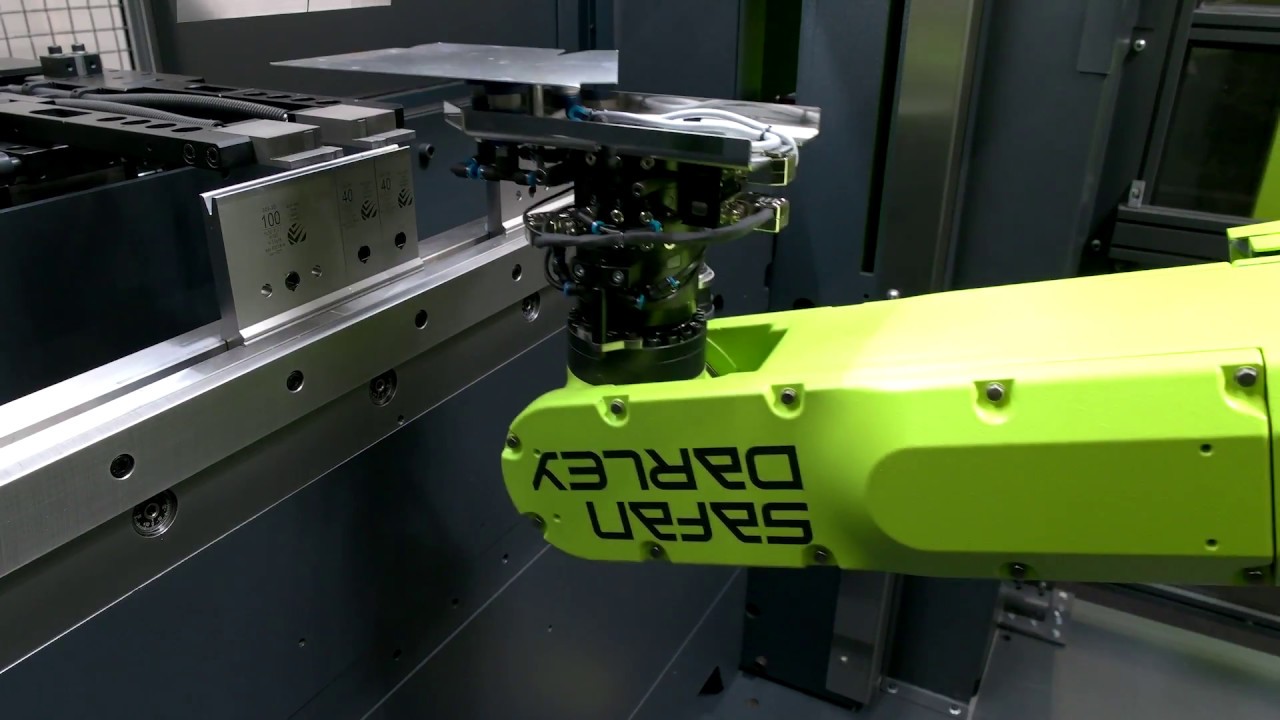 1:30 Energy and Heavy Industry
An automatic bending cell working unattended
A compact automatic bending cell built for job shops rather than for a car plant: robot, press brake and tool changer in a footprint that fits a small building. It shows automation scaled down to a size most fabricators could actually justify. Ninety seconds, no music.
-
 1:24 Energy and Heavy Industry
A hydraulic forging press working a 438 ton ingot
A 438 ton steel ingot being squeezed by a 185 meganewton hydraulic forging press, glowing white and deforming like clay under a load that is hard to write down meaningfully. The manipulator that turns the ingot is itself a very large machine. Eighty-four seconds of pure force.
-
 1:08 Energy and Heavy Industry
Pouring iron on an automated molding line
Molten iron poured into an automated molding line, the ladle tracking the molds as they index past. Foundry pouring is one of the last places where liquid metal and precise machine timing meet. Seventy seconds and the light alone is worth it.
-
 0:51 Energy and Heavy Industry
How a battery cell is made
Fifty seconds of battery cell manufacturing filmed by Tesla, showing electrode winding and cell assembly at a speed that reads as a blur. Gigafactory-scale cell production is one of the newest heavy manufacturing processes in the world. Short, dense and beautifully shot.
Looking for one of these?
Rolling mill equipment, presses, cranes and steel plant machinery. APE buys and sells heavy industrial plant.
American Plant & Equipment has been buying and selling industrial machinery out of Roebuck, South Carolina since 1975, with 97,000 machines in inventory. Tell us the process you need to run and we will go and find the machine, or we will move the one you are finished with.
Prefer to talk? Call (864) 574-0404 or email sales@americanplantandequipment.com.