All machines Machines Humanoid Factory Robots
Futuristic
Humanoid Factory Robots
 1:00
1:00 A humanoid robot on a BMW line. Filmed and published by Figure. Plays from YouTube, nothing here is re-hosted.
What it does
A humanoid robot is an attempt to automate the jobs that were never worth building a special machine for: fetching a bin, sorting mixed parts into a sequencing trolley, moving something from here to there in a building designed entirely around the human body. The argument for the human shape is not sentiment. It is that the factory is already full of stairs, doorways, handles and carts sized for people, and changing the building is more expensive than changing the robot.
How it works
A bipedal or wheeled humanoid platform carries two arms with multi-fingered hands, a set of cameras including palm cameras, tactile sensing in the fingers, and an onboard compute stack running learned policies rather than hand-written motion programs. The robot perceives an unstructured scene, decides on a grasp, executes it, checks the result and recovers when it fails. It charges wirelessly between shifts. This is fundamentally different from a caged industrial arm, which repeats an identical taught path with no perception at all and no ability to handle a part that is not exactly where it was told.
The numbers
The most concrete deployment in manufacturing is at BMW Plant Spartanburg, roughly half an hour from APE in Roebuck. Figure states that its previous generation robot there ran 10-hour shifts Monday through Friday, logged more than 1,250 hours of runtime, handled more than 90,000 parts and contributed to production of over 30,000 vehicles. Figure also states that the current generation, announced for the same plant in June 2026, adds tactile-sensor hands, palm cameras, wireless charging and speech, and is being tested on logistics sequencing where parts arrive unsorted. None of those numbers have been independently verified.
Who uses one
Automotive plants, third party logistics operators and distribution centers, currently in pilot and early production deployment rather than at scale.
More futuristic
See the whole category-
 5:36 Futuristic
China's dark factories, so automated they run with the lights off
Factories running with the lights off, because nothing inside them needs to see. The Wall Street Journal gets inside several of them and explains what is genuinely automated and what is still marketing. It is the most level-headed reporting on lights-out manufacturing available.
-
 19:56 Futuristic
Autonomous haul trucks in the Canadian oil sands
Four hundred ton haul trucks driving themselves around an oil sands mine, twenty-four hours a day, with a control room instead of a cab. BuildWitt rides along and talks to the people whose jobs changed. Twenty minutes of the most consequential automation story in heavy industry.
-
 12:05 Futuristic
A warehouse robot that can feel what it touches
A robot with tactile sensing that can feel the item it is holding and adjust its grip, which is the missing sense in almost all industrial robotics. CNBC gets close enough to see the gripper work. Touch is the hard problem, and this is the clearest look at somebody solving it.
-
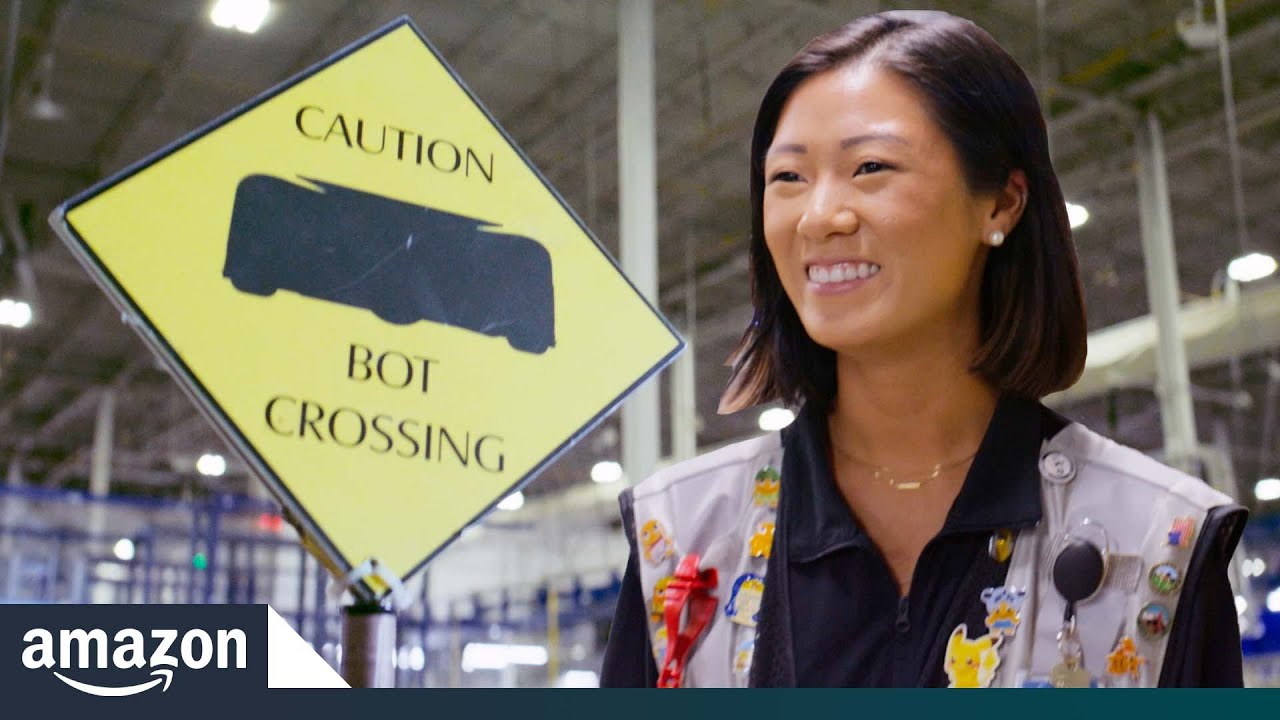 6:50 Futuristic
The full Amazon robot line up
Amazon's whole robot family in one film: floor drive units, robotic arms, container handlers and sortation systems, each doing one part of a job that used to be entirely manual. Seeing them explained as a system rather than as individual gadgets is what makes it worthwhile. Seven minutes, straight from the operator.
-
 4:33 Futuristic
A robot unloading a trailer, box by box
The same robot in a real customer facility rather than in a lab, working a shift alongside people and dealing with the mess of actual freight. Boston Dynamics films the failures as well as the successes. This is what separates a product from a demo.
-
 2:20 Futuristic
How autonomous haulage changes a mine site
Autonomous haul trucks explained by an equipment manufacturer, with the safety and efficiency case laid out plainly rather than sold. Trucks that never get tired change the entire economics of a pit. A useful factual counterpart to the ride-along footage.
-
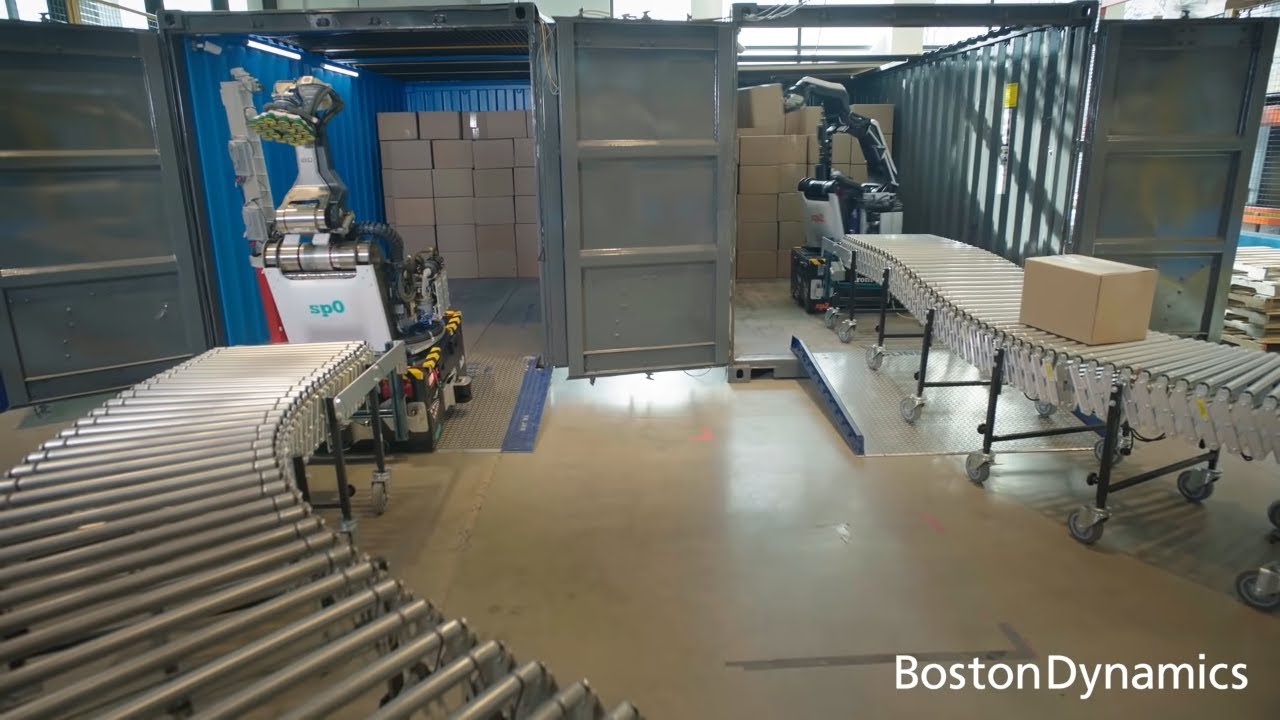 2:01 Futuristic
Introducing a robot built to unload containers
A robot on an omnidirectional base with a seven degree of freedom arm and a suction gripper, built for one job: emptying shipping containers full of randomly stacked boxes. It handles boxes up to 50 pounds and rates around 800 boxes an hour have been quoted. It moves nothing like a factory robot and everything like a creature.
-
 1:53 Futuristic
A humanoid robot's first day of work
A bipedal robot clocking in at a real logistics site, moving totes between a conveyor and a shelf for a full working day. Legs matter because warehouses are built for people, with steps, curbs and clutter. The first day framing makes it oddly human.
Looking for one of these?
Automation changes what a plant needs and what it no longer needs. APE buys surplus equipment and sources what replaces it. Talk to us.
American Plant & Equipment has been buying and selling industrial machinery out of Roebuck, South Carolina since 1975, with 97,000 machines in inventory. Tell us the process you need to run and we will go and find the machine, or we will move the one you are finished with.
Prefer to talk? Call (864) 574-0404 or email sales@americanplantandequipment.com.