All machines Machines Wire EDM
Precision
Wire EDM
 9:36
9:36 How impossibly thin cuts are made. Filmed and published by Steve Mould. Plays from YouTube, nothing here is re-hosted.
What it does
Wire EDM cuts hardened, conductive metal to accuracies conventional machining cannot reach, using electrical sparks instead of a cutting edge. Nothing mechanical ever touches the workpiece, which means there is no cutting force, no tool pressure and therefore no distortion in a thin or delicate part.
How it works
A fine brass or coated wire is fed continuously from a spool, through the workpiece, and away to a waste bin, so the "tool" is always new. The wire and the part are both submerged in or flooded with deionised water. A pulsed DC supply creates a spark across the tiny gap between wire and workpiece. Each spark reaches thousands of degrees and vaporises a microscopic crater of metal; the dielectric flushes the debris away and quenches the site before the next pulse. The wire never touches the part, and the gap is held constant by the control as the spark erodes material. CNC drives move the part or the wire guides along the programmed path, and on machines with a tilting upper guide the top and bottom profiles can differ, producing tapers and true ruled surfaces.
The numbers
Working tolerances are quoted from about plus or minus 0.005 mm to plus or minus 0.02 mm depending on material, thickness and how many passes are run. Plus or minus 0.005 mm is a fair routine expectation in tool steel. Getting to plus or minus 0.002 mm takes several skim passes, a stable temperature and a machine in good order, and 2 microns is about where the tightest published figures sit. Finish passes called skim cuts remove a few microns each to bring the size and the surface home.
Who uses one
Tool and die shops, punch and die makers, aerospace and medical part suppliers, prototype shops and anyone cutting a shape into material already hardened.
More precision
See the whole category-
 17:29 Precision
Inside the plant that builds coordinate measuring machines
A tour of ZEISS metrology showing how a coordinate measuring machine proves a part is what the drawing says it is. Air bearings, granite bases and temperature-controlled rooms exist because at these tolerances your body heat is a measurement error. Without machines like this, precision manufacturing has no way to know it succeeded.
-
 15:08 Precision
Machining a watch gear
Cutting a watch gear means getting tooth form, concentricity and finish right on a part the size of a shirt button. Fifteen minutes of setup, cutting and measuring, all of it filmed properly. It is a masterclass in how much thought sits behind a part most people never see.
-
 12:21 Precision
Millions of tiny precision parts, made in Switzerland
Inside a Swiss shop producing millions of parts a year on rows of sliding headstock lathes, most of them running unattended. The parts are tiny, the tolerances are brutal and the volumes are enormous. It shows the economic argument for automation as clearly as the technical one.
-
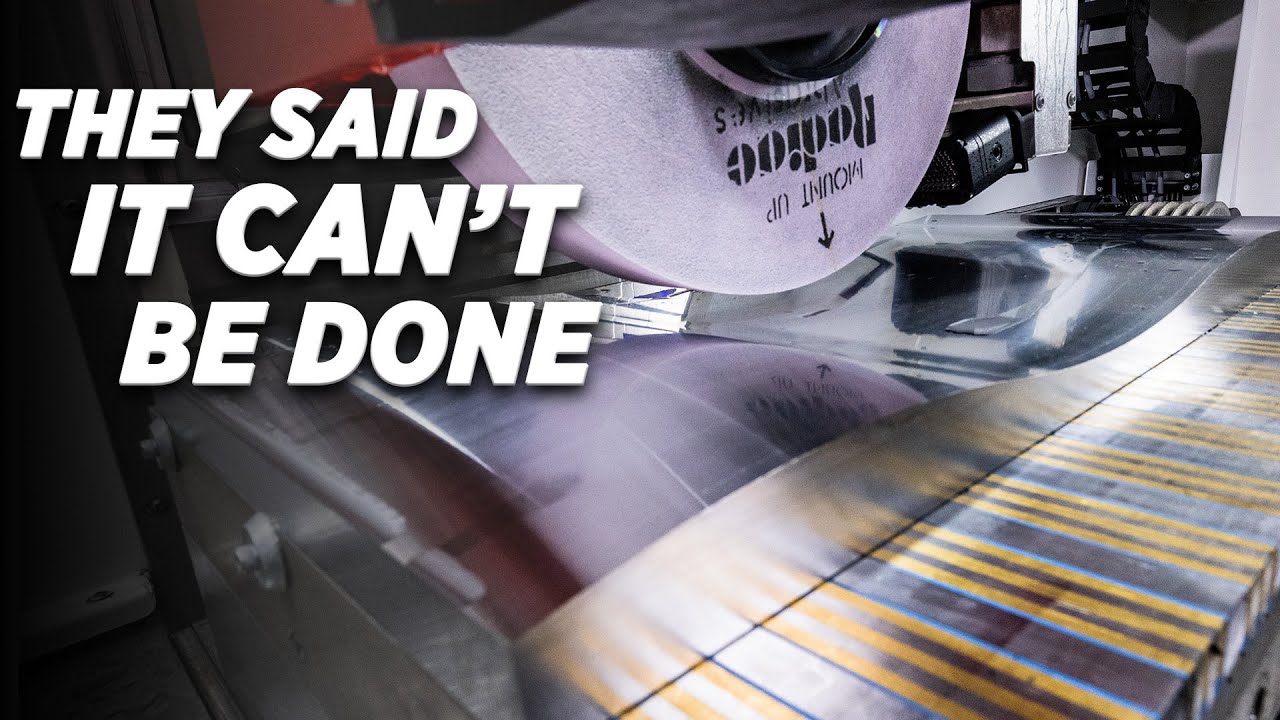 11:46 Precision
The part the shop was told could not be machined
Titan takes on a part that other shops turned down, then shows the fixturing, the toolpath decisions and the moments where it nearly goes wrong. This is 5-axis machining as problem solving rather than as a highlight reel. The finished part is genuinely beautiful.
-
 10:09 Precision
What a wire EDM machine actually does
Practical Machinist walks through what a wire EDM actually does, why the dielectric matters, and where it beats milling outright. Ten minutes, no hype, aimed at people who might buy one. A useful counterweight to the pure eye-candy clips.
-
 4:33 Precision
Machining a 0.6 mm screw
A screw 0.6 mm across, turned from bar stock on a lathe, with a slot and a head you need a microscope to appreciate. Chronova films it close enough that you can watch the chip curl. Watchmaking is where machining stops being manufacturing and becomes something closer to surgery.
-
 4:16 Precision
A gear hobbing machine cutting a very large gear
A hobbing machine cutting a gear several meters across, the hob and the blank rotating in a fixed ratio so the tooth form generates itself out of the geometry. Liebherr shows the chip load and the sheer mass of the setup. Watching a gear appear from a plain disc is oddly hypnotic.
-
 3:45 Precision
Grinding a bevel gear
Bevel gear grinding with a ceramic abrasive wheel, filmed close enough to see the sparks leave the flank. Bevel gears carry torque around a corner, which makes their geometry far harder than a spur gear. Klingelnberg is one of a handful of companies in the world that can build a machine to do this.
Looking for one of these?
Tool room machines, EDM, grinders, CNC: APE buys and sells precision machine tools. Tell us what you need.
American Plant & Equipment has been buying and selling industrial machinery out of Roebuck, South Carolina since 1975, with 97,000 machines in inventory. Tell us the process you need to run and we will go and find the machine, or we will move the one you are finished with.
Prefer to talk? Call (864) 574-0404 or email sales@americanplantandequipment.com.